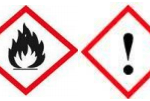

ISOPROPYL ALCOHOL 99.9% FOR PROFESSIONAL USE
Hazard
Highly flammable liquid and vapor. Causes severe eye irritation. May cause drowsiness or dizziness. Take precautions against discharges of static electricity. Avoid inhalation of dust/fume/gas/mist/vapor/spray. Use only outdoors or in a well-ventilated area.
IF ON SKIN (or hair): Remove contaminated clothing immediately – rinse/shower with water.
AFTER INHALATION: Remove victim to fresh air and rest in a position comfortable for breathing.
IF IN EYES: Rinse cautiously with water for several minutes; remove contact lenses. If possible: continue rinsing.
SECTION 1. Identification of the substance or mixture
1.1 Product Identification:
Product name : Isopropyl Alcohol 99.9%.
REACH Registration Number : 01-2119457558-25
Product code : P50055 CAS no. : 67-63-0
EINECS no : 200-661-7
1.2 Relevant identified uses of the substance or mixture and uses advised against.
Use of the substance or mixture: Solvent/industrial use
SECTION 2. Hazard identification
2.1 Classification of the substance or mixture
Classification (EC No. 1272/2008)
Flammable liquids, Category 2 Eye irritation, Category 2 Specific target organ toxicity – single exposure, Category 3. Central nervous system
H225: Highly flammable liquid and vapor.
H319: Causes severe eye irritation.
H336: May cause drowsiness or dizziness.
| Flammable liquids, Category 2 Eye irritation, Category 2 Specific target organ toxicity – single exposure, Category 3, Central nervous system | H225: Highly flammable liquid and vapor. H319: Causes severe eye irritation. H336: May cause drowsiness or dizziness |
2.2 Label elements
Labelling (REGULATION (EC) No 1272/2008)
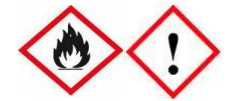
Hazard pictogram(s):
| Signal word: | Danger |
| Indication(s) of danger: | H225 Highly flammable liquid and vapour. H319 Causes serious eye irritation. H336 May cause drowsiness or dizziness. |
| Safety recommendation(s): | Prevention P243 Take precautions against static electricity discharges. P261 Avoid inhalation of dust/fume/gas/mist/vapor/spray. P271 Use only outdoors or in a well-ventilated area. Measures P303+P361+P353 IF ON SKIN (or hair): Remove contaminated clothing immediately – rinse/shower skin with water. P304+P340 IF INHALED: Remove victim to fresh air and keep at rest in a position comfortable for breathing. P305+P351+P338 IF IN EYES: Rinse cautiously with water for several minutes; remove contact lenses, if possible; continue rinsing. |
SECTION 3. Composition and information on ingredients
3.1 Substances
| Chemical name | CAS No | Assay (%) |
|---|---|---|
| EINECS No. / ELINCS No. | ||
| Propaan-2-ol; Isopropyl alcohol; isopropanol |
67-63-0 200-661-7 |
min 99,8% |
SECTION 4. First aid measures
4.1 Description of first aid measures
General advice: Remove contaminated clothing and shoes immediately.
In case of inhalation: In de frisse lucht brengen.
Bij inslikken: Veel water drinken. GEEN braken opwekken. Medische hulp inroepen.
Bij aanraking met de huid: Afwassen met veel water.
Bij aanraking met de ogen: Grondig met veel water spoelen gedurende tenminste 15 minuten en een arts raadplegen.
4.2 Belangrijkste acute en uitgestelde symptomen en effecten
Gevaren: Geen gegevens beschikbaar.
4.3 Vermelding van de vereiste onmiddellijke medische verzorging en speciale behandeling
Behandeling: Voor specialistisch advies dient de arts contact op te nemen met het gifinformatiecentrum.
RUBRIEK 5. Brandbestrijdingsmaatregelen
5.1 Blusmiddelen
Geschikte blusmiddelen: Alcoholbestendig schuim, kooldioxide (CO2), droogpoeder of waternevel.
Ongeschikte blusmiddelen: Sterke waterstraal.
5.2 Speciale gevaren die door de stof of het mengsel worden veroorzaakt.
Specifieke gevaren bij brandbestrijding: Geen gegevens beschikbaar.
5.3 Advies voor brandweerlieden
Nadere informatie: Gebruik waternevel om ongeopende containers af te koelen.
RUBRIEK 6. Maatregelen bij het accidenteel vrijkomen van de stof of het mengsel
6.1 Persoonlijke voorzorgsmaatregelen, beschermde uitrusting en noodprocedures
Persoonlijke voorzorgsmaatregelen: Zorg voor voldoende ventilatie. Verwijderd houden van ontstekingsbronnen. Niet roken.
6.2 Milieuvoorzorgsmaatregelen
Milieuvoorzorgmaatregelen: Niet naar het oppervlaktewater of de riolering laten afvloeien. Laat product niet het grondwater verontreinigen.
6.3 Insluitings- en reinigingsmethoden en -materiaal
Reinigingsmethoden: Opnemen in inert absorberend materiaal (b.v. zand, kiezelgur, zuurbindingsmiddel, universeel bindingsmiddel, zaagsel).
6.4 Verwijzing naar andere rubrieken
Voor persoonlijke bescherming zie paragraaf 8.
RUBRIEK 7. Hantering en opslag
7.1 Voorzorgsmaatregelen voor het veilig hanteren van de stof of het mengsel
Advies voor veilige hantering: Zorg voor voldoende ventilatie. Dampen zijn zwaarder dan lucht en verspreiden zich mogelijk over de vloer.
Advies voor bescherming tegen brand en explosie: Verwijderd houden van ontstekingsbronnen – Niet roken. Dampen kunnen explosieve mengsels vormen met lucht. Niet in afvoer laten komen (explosiegevaar). Maatregelen treffen tegen ontladingen van statische elektriciteit.
7.2 Voorwaarden voor een veilige opslag, met inbegrip van incompatibele producten
Eisen aan opslagruimte en containers: De verpakking goed gesloten houden. Bewaren tussen 5 en 25 ºC in een droge, goed geventileerde ruimte verwijderd van warmtebronnen, ontstekingsbronnen en direct zonlicht.
Duitse opslagclassificatie: 3 Ontvlambare vloeistoffen
7.3 Specifiek eindgebruik
Voor het gebruik van deze stof/dit mengsel de technische richtlijnen raadplegen.
RUBRIEK 8. Maatregelen ter beheersing van blootstelling / persoonlijke bescherming
8.1 Controleparameters
Het product bevat geen bestanddelen waarvoor MAC-waarden zijn vastgelegd.
Het product bevat geen bestanddelen waarvoor MAC-waarden zijn vastgelegd.
DNEL
Propaan-2-ol; Isopropylalcohol; isopropanol:
Eindgebruik: Werknemers
Blootstellingsroute: Aanraking met de huid
Mogelijke gezondheidsaandoeningen: Chronische effecten
Blootstellingstijd: 1 d
Waarde: 888 mg/kg
Eindgebruik: Werknemers
Blootstellingsroute: Inademing
Mogelijke gezondheidsaandoeningen: Chronische effecten
Waarde: 500 mg/m3
Eindgebruik: Consumenten
Blootstellingsroute: Aanraking met de huid
Mogelijke gezondheidsaandoeningen: Chronische effecten
Blootstellingstijd: 1 d
Waarde: 319 mg/kg
Eindgebruik: Consumenten
Blootstellingsroute: Inademing
Mogelijke gezondheidsaandoeningen: Chronische effecten
Waarde: 89 mg/m3
Eindgebruik: Consumenten
Blootstellingsroute: Inslikken
Mogelijke gezondheidsaandoeningen: Chronische effecten
Blootstellingstijd: 1 d Waarde: 26 mg/kg
PNEC
Propaan-2-ol; Isopropylalcohol; isopropanol:
Zoetwater
Waarde: 140,9 mg/l
Zeewater
Waarde: 140,9 mg/l
Zoetwater afzetting
Waarde: 552 mg/kg
Zeeafzetting
Waarde: 552 mg/kg
Bodem
Waarde: 28 mg/kg
8.2 Maatregelen ter beheersing van blootstelling
Persoonlijke beschermingsmiddelen
Bescherming van de ademhalingswegen: Geen persoonlijke adembescherming vereist bij normaal gebruik. Bij onvoldoende ventilatie, overschrijding van werkplekgrenswaarden, te ernstige stankoverlast of bij het vrijkomen van aërosols, nevel en rook een van de omgevingslucht onafhankelijk ademmasker of ademmasker met filtertype A of dienovereenkomstig combinatiefilter (bij optreden van aërosol, nevel en rook, bijv. A-P2 of ABEK-P2) volgens EN 141 gebruiken.
Bescherming van de ogen: Nauw aansluitende veiligheidsstofbril.
Hygiënische maatregelen: Verontreinigde kleding onmiddellijk uittrekken.
Beschermende maatregelen: Aanraking met de ogen en huid vermijden. Dampen of spuitnevel niet inademen.
Beheersing van milieublootstelling
Algemeen advies: Niet naar het oppervlaktewater of de riolering laten afvloeien. Laat het product niet het grondwater verontreinigen.
RUBRIEK 9. Fysische en chemische eigenschappen
9.1 Informatie over fysische en chemische basiseigenschappen
Voorkomen : Vloeistof
Kleur : Kleurloos
Geur : Alcoholisch
pH : niet van toepassing
Oplosbaarheid in water : volledig mengbaar
Kookpunt/kooktraject : 82 ºC, 1.013 hPa
Smeltpunt/-traject : ca. -89 ºC
Vlampunt : 12 ºC
Onderste explosiegrens : 2 % (V)
Bovenste explosiegrens : 12% (V)
Dampspanning : 42 hPa, 20 ºC 60,2 hPa, 25 ºC
Dichtheid : 0,7855 g/cm3, 20 ºC
Verdelingscoëfficiënt n-octanol/water : log Pow: 0,05, 25 ºC (literatuurwaarde)
Zelfontbrandingstemperatuur : > 399 ºC
Ontstekingstemperatuur : 425 ºC
Thermische ontleding : Geen ontleding indien aanwijzingen worden gevolgd.
Viscositeit, dynamisch : 2,5 mPa.s, 20 ºC 2,1 mPa.s, 25 ºC
Ontploffingseigenschappen : Niet explosief, niet explosief
9.2 Overige informatie
Oxideringsvermogen : geen gegevens beschikbaar.
Brekingsindex : 1,376 – 1,378, 20 ºC
RUBRIEK 10. Stabiliteit en reactiviteit
10.1 Reactiviteit
Geen gegevens beschikbaar.
10.2 Chemische stabiliteit
Geen gegevens beschikbaar.
10.3 Mogelijke gevaarlijke reacties
Gevaarlijke reacties : Dampen kunnen explosief mengsel vormen met lucht.
10.4 Te vermijden omstandigheden
Te vermijden omstandigheden : Warmte, vlammen en vonken.
10.5 Chemisch op elkaar inwerkende materialen
Te vermijden materialen : Geen gegevens beschikbaar.
10.6 Gevaarlijke ontledingsproducten
Gevaarlijke ontledingsproducten : Geen ontleding bij normale opslag.
RUBRIEK 11. Toxicologische informatie
11.1 Informatie over toxicologische effecten
Nadere informatie: Geen gegevens beschikbaar.
Bestanddelen
Propaan-2-ol; isopropylalcohol; isopropanol:
Acute orale toxiciteit: LD50: > 2.000 mg/kg, rat, GLP: nee, (literatuurwaarde)
Acute dermale toxiciteit: LD50: > 2.000 mg/kg, konijn, GLP: nee, (literatuurwaarde)
Huidcorrosie/-irritatie: Konijn, Resultaat: niet irriterend, GLP: nee, (literatuurwaarde)
Ernstig oogletsel/oogirritatie: Konijn, Resultaat: irriterend, GLP: nee, (literatuurwaarde)
Sensibilisatie van de luchtwegen/de huid: Bühler-test, cavia, Resultaat: niet sensibiliserend, GLP: nee, (literatuurwaarde)
Mutageniteit in geslachtcellen
Genotoxiciteit in vitro: Ames test, Salmonella typhimurium, met en zonder, Resultaat: niet mutageen, GLP: nee, (literatuurwaarde)
RUBRIEK 12. Ecologische informatie
12.1 Toxiciteit
Bestanddelen
Propaan-2-ol; isopropylalcohol; isopropanol:
Toxiciteit voor vissen: LC50: > 100 mg/l, 48h, Leuciscus idus melanotus, stilstaand, GLP: nee, (literatuurwaarde)
Toxociteit voor dafnia’s en anderen ongewervelde waterdieren: EC50: > 100 mg/l, 48h, Daphnia Magna, statische test, GLP: nee, (literatuurwaarde)
Toxiciteit voor algen: EC50: > 100 mg/l, 72 h, Scenedesmus subspicatus, statische test, GLP: nee, (literatuurwaarde)
12.2 Persistentie en afbreekbaarheid
Bestanddelen
Propaan-2-ol: isopropylalcohol: isopropanol:
Biologische afbreekbaarheid: Aëroob, > 70%, Resultaat: gemakkelijk biologisch afbreekbaar.
Blootstellingstijd: 10 d, gehalte 7 mg/l, GLP: nee, (literatuurwaarde).
12.3 Bioaccumulatie
12.4 Mobiliteit in de bodem
12.5 Resultaten van PBT- en zPzB- beoordeling
Bestanddelen
Propaan-2-ol; isopropylalcohol; isopropanol:
Beoordeling: Deze stof wordt niet beschouwd als persistent, bioaccumulerend, of toxisch (PBT). Deze stof wordt niet beschouwd als zeer persistent of zeer bioaccumulerend (zPzB).
12.6 Andere schadelijke effecten
Product
Aanvullende ecologische informatie: Geen gegevens beschikbaar.
RUBRIEK 13. Instructies voor verwijdering
13.1 Afvalverwerkingsmethoden
Product: Dient onder inachtneming van de voorschriften voor gevaarlijke afvalstoffen na voorbereiding naar een daarvoor toegelaten vuilstortplaats voor gevaarlijke afvalstoffen of een verbrandingsinstallatie voor gevaarlijke afvalstoffen te worden gebracht.
Verontreinigde verpakking: Kan na verdere bewerking worden gebruikt.
RUBRIEK 14. Informatie met betrekking tot het vervoer
14.1 VN-nummer
ADR 1219
RID 1219
IMDG 1219
IATA 1219
14.2 Juiste ladingnaam overeenkomstig de modelreglementen van de VN
ADR : Isopropylalcohol, Isopropanol
RID : Isopropylalcohol, Isopropanol
IMDG : Isopropanol, Isopropyl alcohol
IATA : Isopropanol
14.3 Transportgevarenklasse(n)
ADR : 3
RID : 3
IMDG : 3
IATA : 3
14.4 Verpakkingsgroep
ADR
Verpakkingsgroep : II
Classificatiecode : F1
Gevarenidentificatienr. : 33
Etiketten : 3
Tunnelrestrictiecode : (D/E)
RID
Verpakkingsgroep : II
Classificatiecode : F1
Gevarenidentificatienr. : 33
Etiketten : 3
IMDG
Verpakkingsgroep : II
Etiketten : 3
EMS nummer : F-E, S-D
IATA
Verpakkingsvoorschrift : 307 (vrachtvliegtuig)
Verpakkingsgroep : II
Etiketten : 3
14.5 Milieugevaren
ADR
Milieugevaarlijk : nee
RID
Milieugevaarlijk : nee
IMDG
Mariene verontreiniging : nee
IATA
Milieugevaarlijk : nee
14.6 Bijzondere voorzorgen voor de gebruiker
Geen gegevens beschikbaar.
14.7 Vervoer in bulk overeenkomstig bijlage II bij MARPOL 73/78 en de IBC-code
Verontreinigingcategorie
RUBRIEK 15. Regelgeving
15.1 Specifieke veiligheids-, gezondheids- en milieureglementen en –wetgeving voor de stof of het mengsel
Wetgeving over gevaar bij zware ongevallen:
96/82/EC
Licht ontvlambaar
Hoeveelheid 1: 5.000 t
Hoeveelheid 2: 50.000 t
Notificatiestatus
EINECS : Op of overeenkomstig de lijst
TSCA : Op de TSCA-lijst
AUSTR : Op of overeenkomstig de lijst
DSL : Alle bestanddelen van dit product komen voor op de Canadese DSL lijst
ENCS : Op of overeenkomstig de lijst
KOREA : Op of overeenkomstig de lijst
PHIL : Op of overeenkomstig de lijst
CHINA : Op of overeenkomstig de lijst
ISHL : Op of overeenkomstig de lijst
NZIOC : Op of overeenkomstig de lijst
15.2 Chemische veiligheidsbeoordeling
Een chemische veiligheidsbeoordeling is uitgevoerd voor deze stof.
RUBRIEK 16. Overige informatie
Vermelding van wijzigingen
1.4 Gewijzigd
Volledige tekst van H-zinnen zoals vermeld in paragraaf 2 en 3.
H225 Licht ontvlambare vloeistof en damp.
H319 Veroorzaakt ernstige oogirritatie. H336
Kan slaperigheid of duizeligheid veroorzaken.
Nadere informatie
Overige informatie
Deze gegevens zijn gebaseerd op de huidige stand van onze kennis. Zij beschrijven echter geen garantie van producteigenschappen en vestigen geen contractuele rechtsbetrekking.